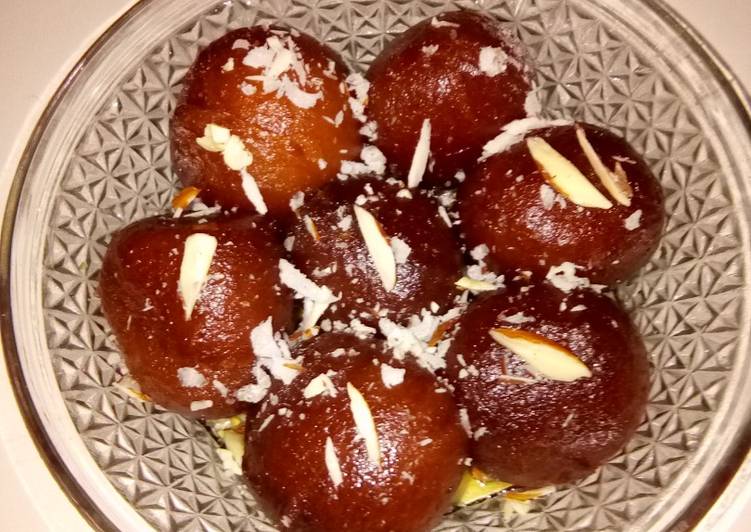
Mava Gulab Jamun. Khoya gulab jamun recipe with video & step by step photos - Traditional gulab jamun If khoya or mawa is not available in the place where you live you can try this Gulab jamun. Gulab Jamun is one of India's most popular sweet. These deep-fried dumplings/donuts made of dried milk [khoya] are dipped in a rose-cardamom flavored sugar syrup and. made for occasions and festival celebrations. gulab jamun recipe
 Subscribe for more recipes Gujab Jamun recipe video by Nisha Madhulika.
How to Make Gulab Jamun ?
Authentically and traditionally Gulab Jamun is always made with khoya.
You can cook Mava Gulab Jamun using 6 ingredients and 5 steps. Here is how you cook it.
Subscribe for more recipes Gujab Jamun recipe video by Nisha Madhulika.
How to Make Gulab Jamun ?
Authentically and traditionally Gulab Jamun is always made with khoya.
You can cook Mava Gulab Jamun using 6 ingredients and 5 steps. Here is how you cook it.
Ingredients of Mava Gulab Jamun
- Prepare 200 gm of mava.
- You need 2 tbsp of maida.
- Prepare 400 gm of sugar.
- You need 300 ml of water.
- You need 200 ml of ghee.
- You need 2 pinch of elaichi powder.
Khoya or mawa is the Hindi term for evaporated milk solids. It is made by continuously cooking the milk on a. Gulab jamuns are popular all over India. This recipe tells you how to make authentic Gulab Jamun, not with any readymade mixes, but with special hariyali mava, which gives the traditional sweet its.
Mava Gulab Jamun instructions
- For chashni: Take 300 ml water and mix with 400 gm sugar and boil for 10 to 15 minutes to make sugar syrup and then mix elaichi powder. Chashni is ready..
- For Gulab Jamun: Take mava and add maida and mix it well into a soft dough and then make small balls..
- Now heat ghee in pan on low flame and deep fry the balls till dark brown..
- After that put the prepared balls into the sugar syrup and let it set for 4 hours..
- Your mava gulab jamun is ready..
Gulab Jamun is a traditional and popular dessert variety of India. Gulab Jamun are simple and easy to make. Most of us have the habit of getting ready mix for Gulab Jamun. Authentic Gulab Jamun made with hariyali mava has a very rich mouth-feel that gels well with festivity. In a bygone era, when everything was made at home, khoya would be made in winter and used in.
