Semolina kheer. Kheer is a sweet, milky Indian dessert made from any of these - rice, vermicilli, cracked wheat, squash, tapioca and semolina. Add milk, when it is half done. Boil well and add sugar and powdered cardamom.
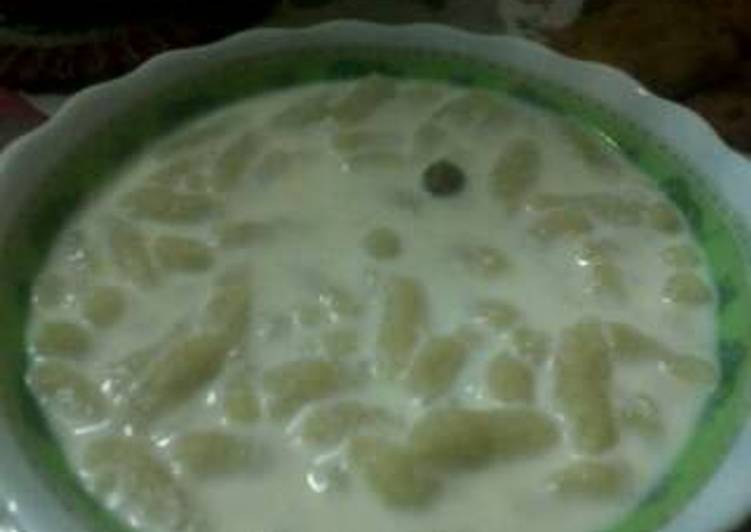 It is an instant recipe and can be prepared in less time.
Serve hot and nutritious Sooji Kheer in winters to your family members to keep them healthy.
The Indian semolina pudding is an absolute classic known as sooji kheer or rava kheer.
You can cook Semolina kheer using 5 ingredients and 4 steps. Here is how you cook that.
It is an instant recipe and can be prepared in less time.
Serve hot and nutritious Sooji Kheer in winters to your family members to keep them healthy.
The Indian semolina pudding is an absolute classic known as sooji kheer or rava kheer.
You can cook Semolina kheer using 5 ingredients and 4 steps. Here is how you cook that.
Ingredients of Semolina kheer
- Prepare 250 g of semolina.
- Prepare 500 g of sugar.
- It's 1 ltr of milk.
- You need 150 gm of Khoa.
- It's 2-3 pieces of cardamom.
How to make sooji kheer, rava kheer or Instant Indian Semolina Pudding. Have you ever eaten an Indian. i have already shared the traditional kheer recipe and also the famous south indian rice kheer recipe. while i personally like the former recipes, but i prepare rava kheer during festive season or fasting. Semolina is a very gritty, coarse type of flour, usually made from durum wheat. Let it simmer on medium heat while stirring till kheer thickens.
Semolina kheer step by step
- Mix semolina with khoa. Make small cylindrical pieces of the dough..
- Reduce milk to half. Add the pieces of semolina mix..
- Keep on the flame for a minute. Remove from fire and serve after cooling..
- Boil milk with sugar and 2 pieces of cardamom..
Don't thicken it too much, this kheer tastes better when it is only slightly thick. Apple Suji Kheer for babies- Sooji kheer/ Rawa payasam was my daughter's favorite food when she was a baby and still loves that slightly thin milky porridge with raisins as well as the suji halwa. Semolina is the coarse, purified wheat middlings of durum wheat mainly used in making upma, pasta, and couscous. The word semolina can also refer to sweet dessert made from semolina and milk. The term semolina is also used to designate coarse middlings from other varieties of wheat.
